Bangkok Street Food Guide: What to Eat, Stall by Stall
Some links in this post are affiliate links — if you book or buy through them, we may earn a small commission at no extra cost to you. How this works.
The Wok Breath on Yaowarat
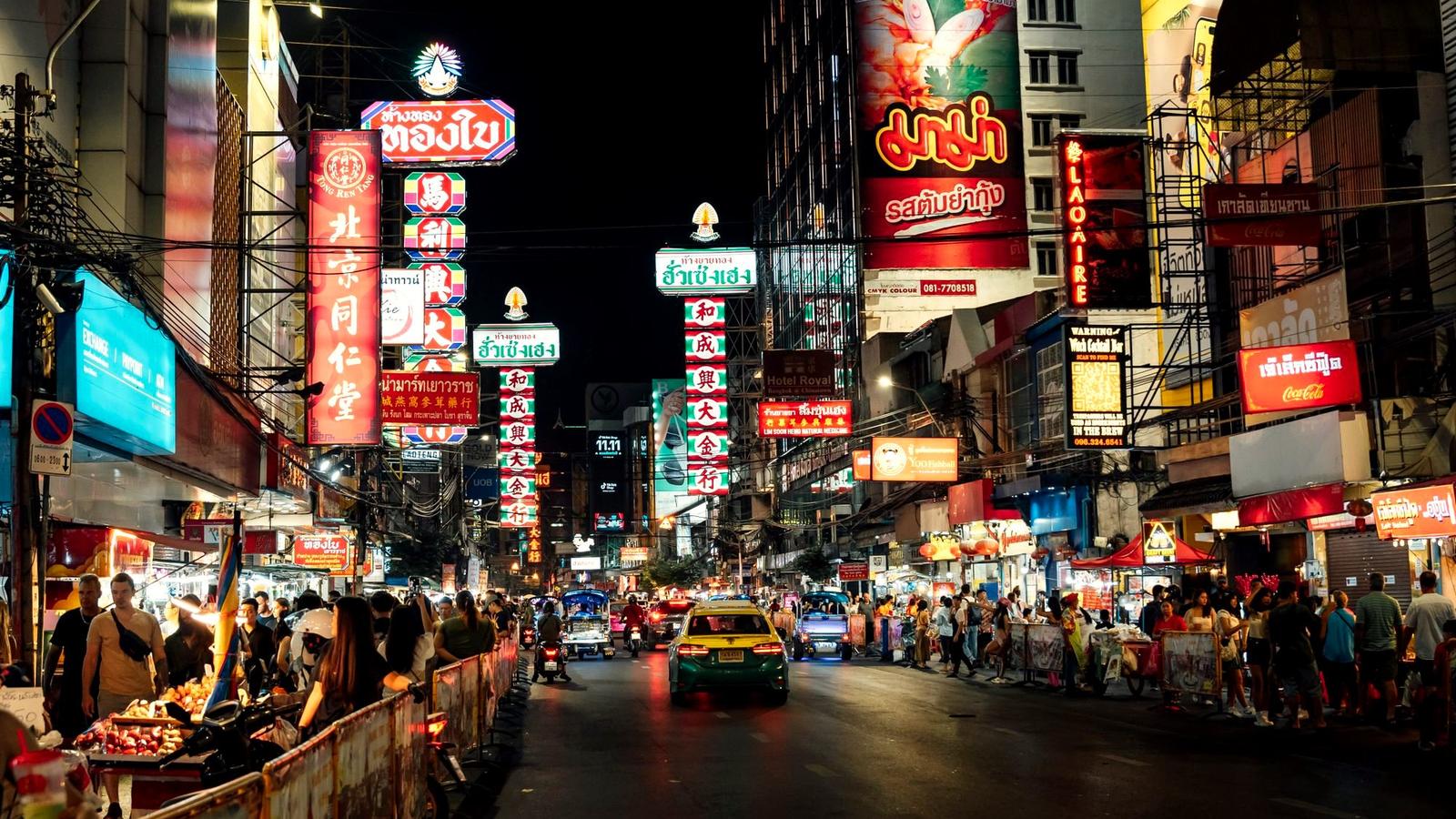
There's a moment, somewhere past ten on Yaowarat Road, when the whole street seems to exhale fire. A cook tips oil into a screaming wok, the flame climbs past his shoulder, and for a second the crowd goes orange. I had walked an hour through Chinatown to stand there, and I still had no idea what to eat. That is the honest problem with any Bangkok street food guide: the city hands you too much at once, and all of it is good.
So let me draw the edges in. This is what to eat, where the stalls actually stand, and how to order without paying the quiet tax reserved for people who look lost. Come hungry, bring small notes, and give your stomach a night to catch up.
A Bangkok Street Food Map, Drawn in Smoke
The food follows the heat of the day. Mornings belong to the wet markets and the pork-skewer carts; the real theatre waits for dark. Learn four grounds and you have the whole city covered.
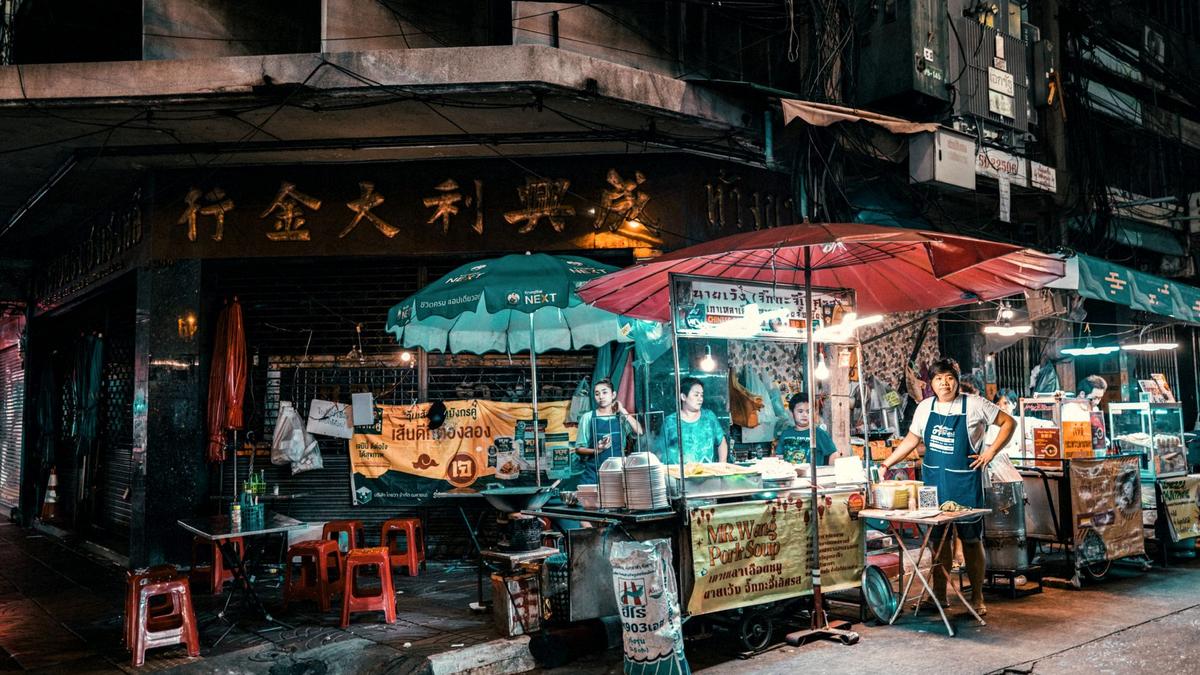
Yaowarat, Chinatown's spine, is the headline act — the chinatown bangkok food stalls unroll their steel counters around eight and run past midnight, seafood on ice and woks throwing sparks. For a quieter, tighter hit, the boat-noodle alley off Victory Monument ladles dark broth into bowls the size of a teacup. Or Tor Kor market, across from Chatuchak, is the polished one — spotless, pricier, and the place to taste curries without the sweat. And when you want scale, the night markets deliver: Jodd Fairs near Rama IX is the current favourite, and it belongs on any short list of the best night markets in bangkok.
What stays with me is how walkable each of these is once you commit to one per evening. Don't try to chain them across the city in a single night — the traffic will beat you, and you'll eat badly out of hurry. Pick a ground, arrive hungry, and stay put.
If you want the map drawn for you on the first night, a guided food crawl is worth the money — a local walks you past the stalls a stranger would never spot, and you learn the ordering rhythm by watching. I book these through Klook or KKday, both strong across Asia; a few worth booking:
Tour recommendations are powered by our travel partner and need cookies to load.
It's the same market logic that makes Oaxaca's food stalls sing — eat where the locals queue, not where the menu has photographs.
What to Eat: The Bangkok Street Food Worth Crossing the City For
Start with the one everybody names and few actually reach. Jay Fai, on Maha Chai Road, cooks in ski goggles over two charcoal burners, and her crab omelette arrives like a golden log, dense with sweet meat and crisped at the edges where the oil caught. The queue is long and the price is not street-stall cheap. Slow down, and decide whether the wait is your kind of pilgrimage; on a tight night, the omelette carts nearer Yaowarat do a humbler, faster version.
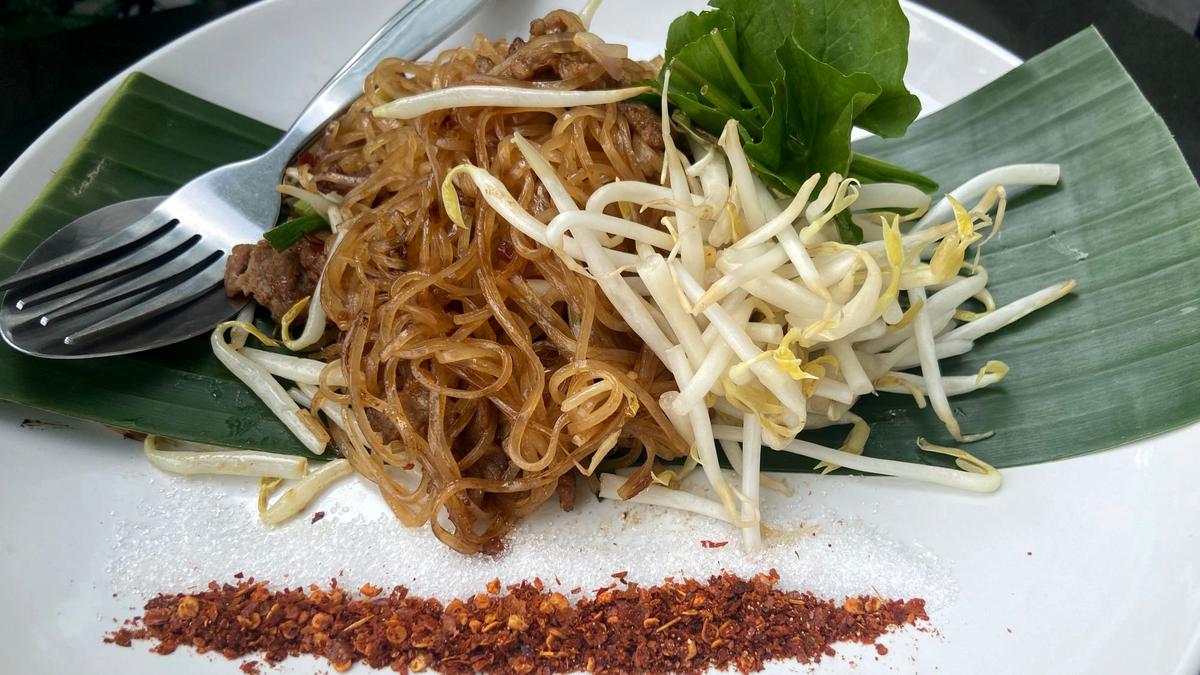
Then there is the noodle everyone underrates. Boat noodles — kuaytiaw reua — come in a broth darkened with blood and spice, tiny by design so you order five bowls and stack the empties into a tower. The pork is soft, the basil sharp, the whole thing gone in four spoonfuls. Chase it, if it's late, with the burnt-chilli tom yum mama at Jeh O Chula, where instant noodles meet a broth so sour-hot it clears your head.
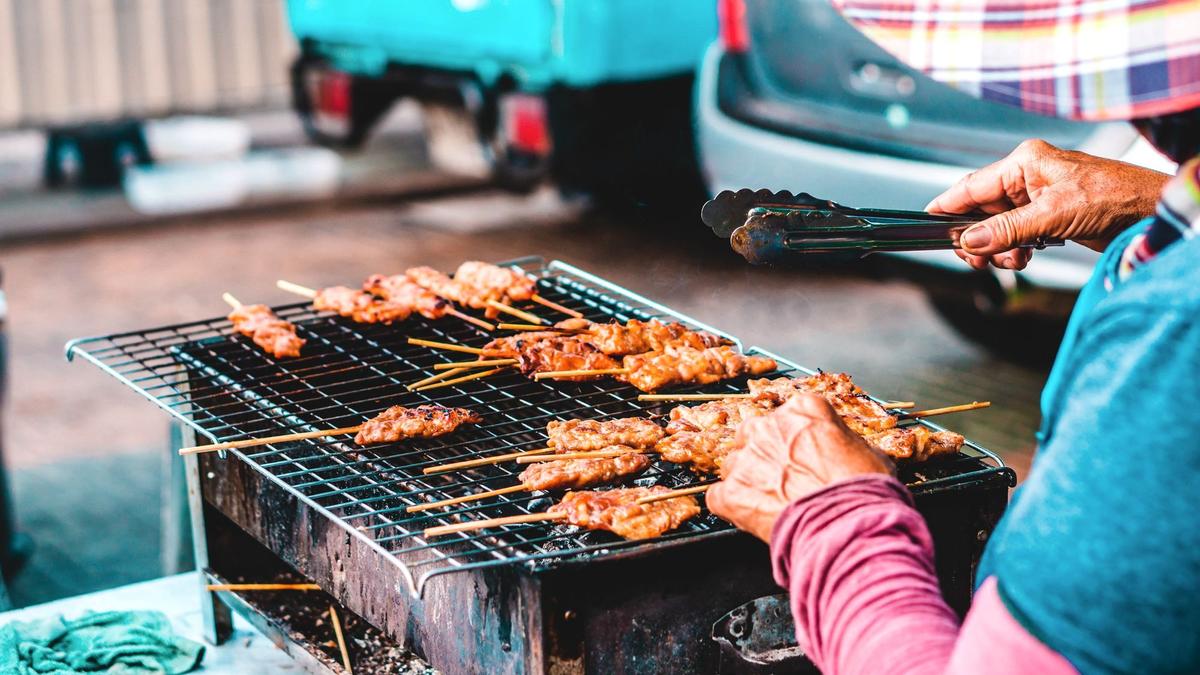
Breakfast is simpler and, to me, the most Thai thing of all: moo ping, charcoal pork skewers glossed with coconut, bought from a cart with a bag of warm sticky rice. Two skewers, a fistful of rice, forty baht. Eat it standing on a corner while the market wakes up.
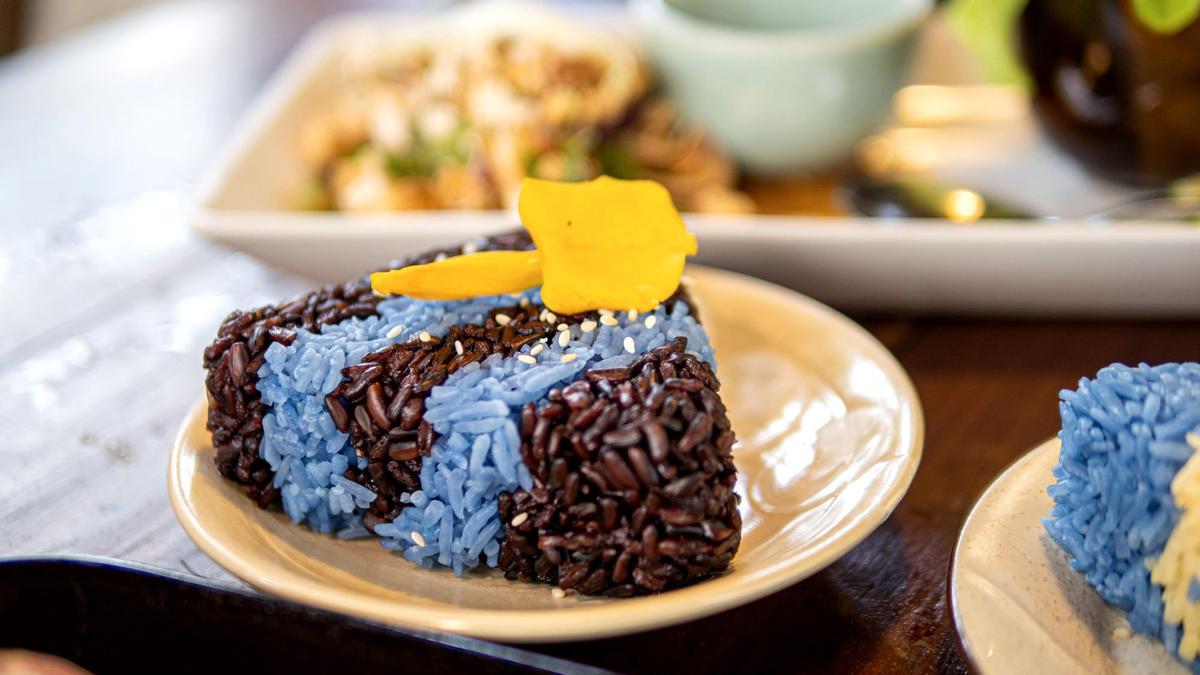
And you finish, always, on mango sticky rice — khao niaow mamuang. Ripe nam dok mai mango, warm glutinous rice, a slick of salted coconut cream poured over the top. The contrast of sweet fruit and salted rice is the flavour I carry home. Buy it from a fruit cart, not a café, and eat it before the rice cools.
How to Order Like You Belong
The stalls run on a rhythm, and once you see it, you stop looking like prey. Carry cash — small notes, twenties and hundreds — because almost nobody takes a card and the change comes fast. Bring your own tissues; napkins are a luxury the best stalls skip.
At a busy sit-down stall, grab a table first, then order — hovering by the wok gets you nowhere. If there's no English menu, and often there won't be, point at the dish being cooked at the next table. Look for the stalls where Thai families are three-deep and the pot never stops turning over; a high queue of locals is the only review that matters.
On street food safety tips, the honest version: eat it hot and fresh, off a stall doing brisk trade, and you'll be fine — it's the lukewarm, slow-moving tray that turns on you, not the roaring wok. Go easy on the ice and the raw salads your first day while your stomach finds its feet, and drink bottled water. I map the stalls I want on an offline pin-drop, which means data from the moment I land — I run an Airalo eSIM, though Saily works just as well, and I've laid out the trade-offs in my guide to the best travel eSIM.
People Also Ask
Is Bangkok street food safe to eat?
Yes, if you use your eyes. Choose stalls with heavy local turnover, eat what's cooked hot in front of you, and skip anything sitting lukewarm on a tray. Go gently on ice and raw salads on day one, stick to bottled water, and the busy Yaowarat grills are far safer than a quiet tourist café.
What is the best area for Bangkok street food?
Yaowarat, the Chinatown stretch, is the obvious answer after dark — dense, cheap, and open past midnight. For boat noodles head to Victory Monument, for polished market food try Or Tor Kor, and for a big night-market spread go to Jodd Fairs near Rama IX.
How much does street food cost in Bangkok?
Most single dishes run 40 to 80 baht — roughly one to two US dollars. A full evening of grazing, five or six stalls deep, rarely tops 300 baht unless you queue for a Michelin-listed stall like Jay Fai, where a signature plate can run into the thousands.
What time does Yaowarat street food start?
The stalls set up from around 6pm and hit full swing by 8pm, running to midnight and beyond on weekends. Arrive by seven for the best of the seafood before the longest queues form.
The Last Bowl Before Midnight
Bangkok doesn't reward the tidy plan; it rewards appetite and a bit of patience in the queue. Eat one ground a night, pay in cash, and follow the locals to the loudest wok — that's the whole method. Base yourself near Chinatown or Silom to keep the good stalls within a short walk (I book stays through Klook), come back hungry the next night, and let the city feed you.