Getting Around Vietnam: Flights, Trains, Sleeper Buses and Grab
Some links in this post are affiliate links — if you book or buy through them, we may earn a small commission at no extra cost to you. How this works.
In this guide
Getting Around Vietnam: Fly the Long Legs, Ride the Short Ones
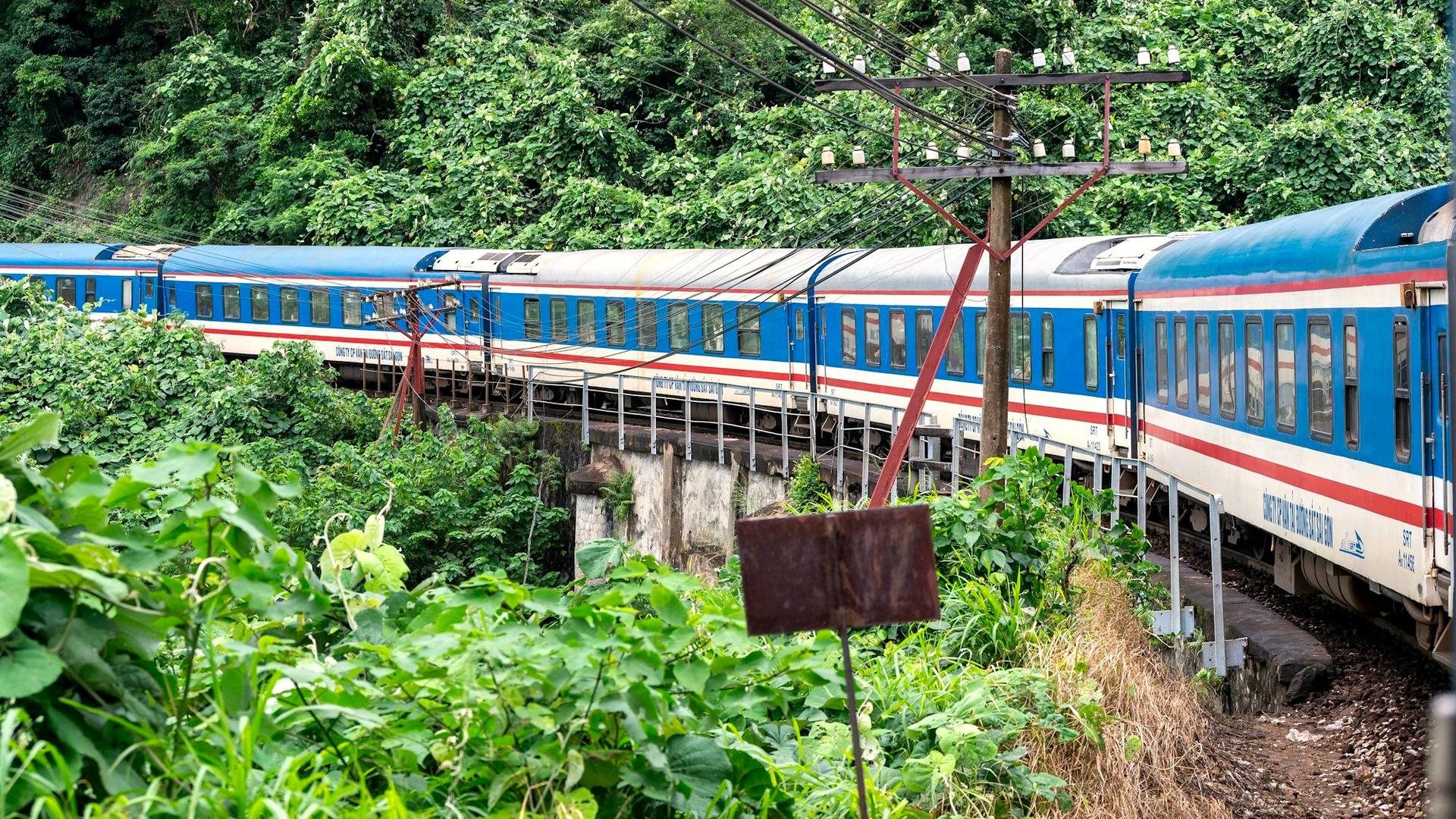
Getting around Vietnam comes down to distance: fly between the far ends of the country, take a train or bus for suitable medium-distance legs, and use Grab or a metro line inside the cities. The fastest train between Hanoi and Ho Chi Minh City takes 32 hours 45 minutes on the timetable running to December 30, 2026. The national tourism board puts the same trip at a one- or two-hour flight.
Getting around Vietnam on your own works on all of these modes, with tickets sold online and in English by the railway's agents and the ride-hailing apps. Prices here are in Vietnamese dong. The US dollar conversions are illustrative: they use the State Bank's reference rate of VND 25,652 for November 17, 2026, as reported by VietnamPlus, while the same report put the big banks' selling rate that morning at VND 25,950. The Vietnam travel guide links every city guide in the cluster.
Match the mode to the leg:
- Hanoi to Ho Chi Minh City (1,726 km by rail): fly; the fastest train, SE1, takes 32 hours 45 minutes
- Hanoi to Hue or Da Nang: the overnight train, 12 hours 30 minutes to Hue and 15 hours 8 minutes to Da Nang on SE3, or a flight
- Ho Chi Minh City to Nha Trang: a 7-hour-9-minute ride on SE2
- Hue to Da Nang: a daytime train over the Hai Van Pass, then a car to Hoi An
- Hanoi to Ha Long Bay: a road transfer, compared in the Ha Long Bay cruise guide
- Inside Hanoi and Ho Chi Minh City: Grab or a metered taxi from a large firm for most central trips, and the metro where a line runs
Domestic Flights and the Long Thanh Switch
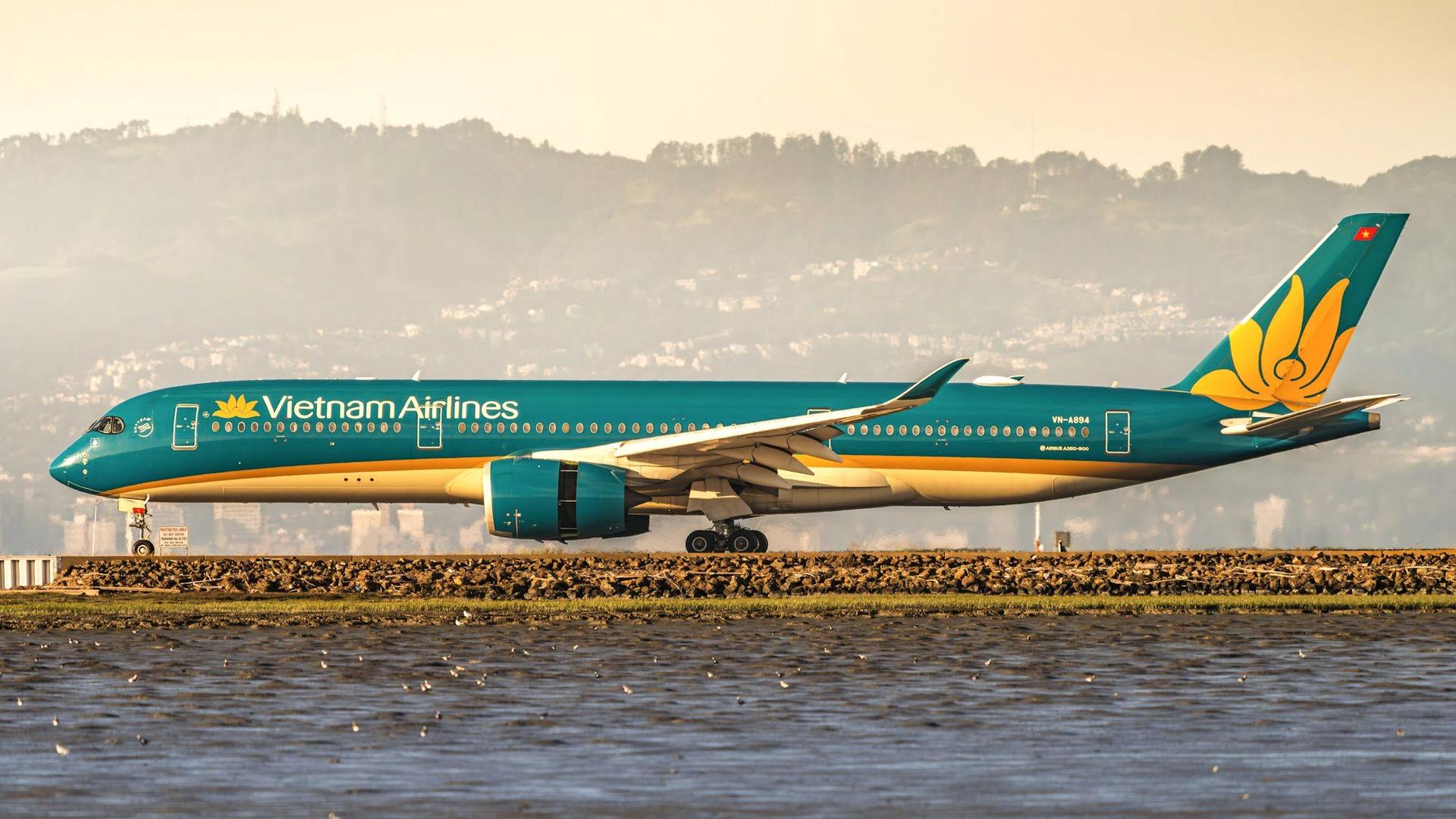
Flying saves the most time on any leg longer than a night on the train. The tourism board names Vietnam Airlines as the national carrier with the most daily flights, and lists Vietjet for short hops around the country. Flight fares move with the date, so they aren't quoted here; compare them on the airlines' own sites.
Ho Chi Minh City is due to get a second airport this winter. Long Thanh International Airport, in Dong Nai, is expected to start commercial operations at midnight on December 24, 2026. VietnamPlus reported that date from a notice the Airports Corporation of Vietnam sent to the Dong Nai city government.
The first phase plans up to 366 flights a week, 322 of them domestic; that is an initial plan, not a confirmed schedule. Vietnam Airlines is expected to fly Long Thanh–Hanoi, and Vietjet plans domestic routes from Long Thanh to major economic and tourism centers. Flight allocations are still being coordinated with Tan Son Nhat, the city's current airport.
Before booking a flight into Ho Chi Minh City from late December:
- Read the airport on the ticket: if Long Thanh opens as planned, a Ho Chi Minh City flight may use Tan Son Nhat or Long Thanh
- Check the ride from that airport: Long Thanh is in Dong Nai, not in Ho Chi Minh City, so confirm the ground transfer to the actual hotel or next stop
- Check what the fare includes: read the carry-on and checked-bag allowance before paying
Landing in Hanoi instead? The guide to Noi Bai airport to the Old Quarter compares bus 86, Grab, taxis and transfers.
Getting Around Vietnam by Train: Classes, Times and Fares
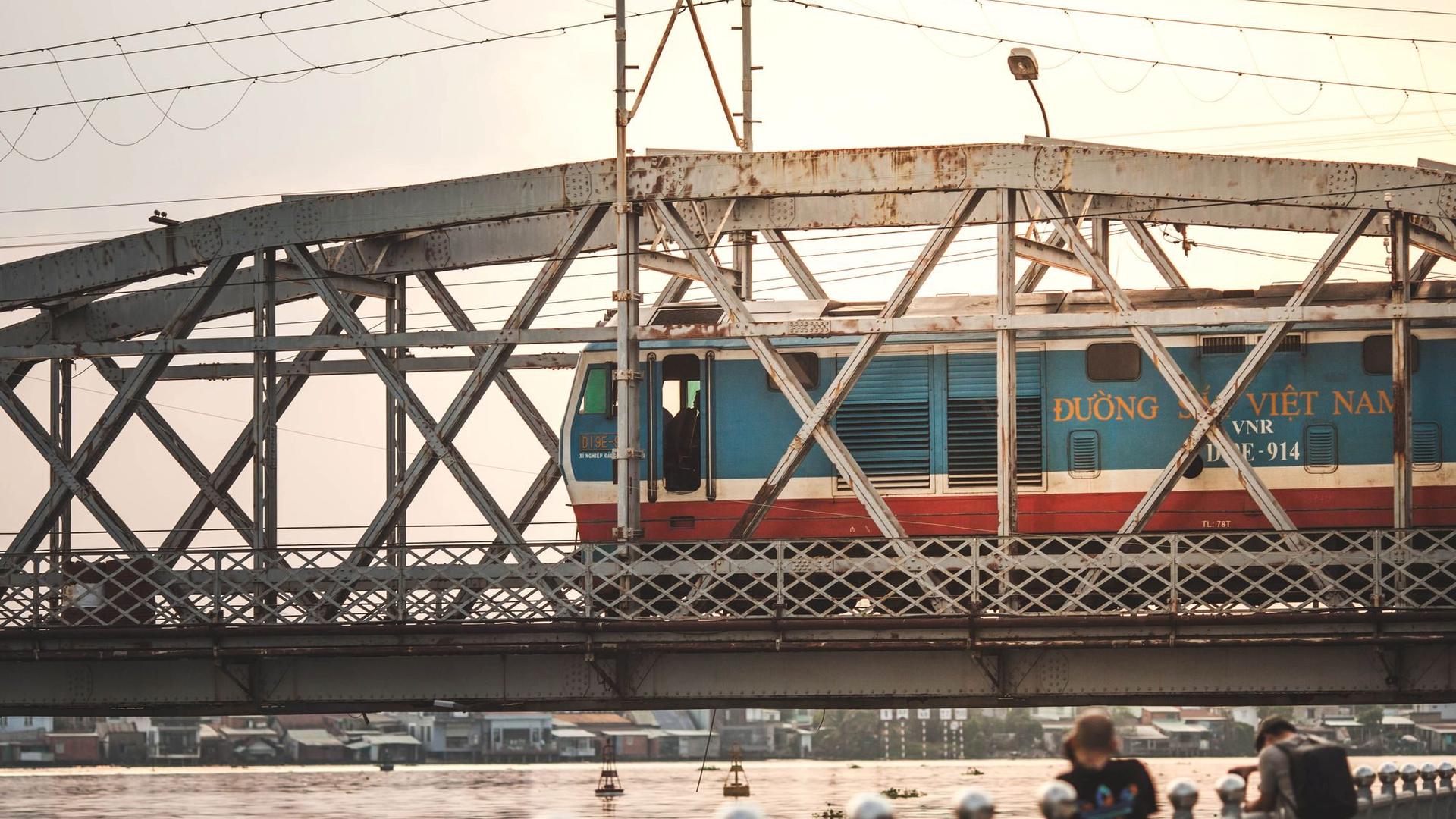
The train suits the legs a night can cover, such as Hanoi to Hue or Da Nang. Sleeper trains also save a hotel night and the taxis to and from airports, as seat61 points out.
Vexere publishes the timetable for August 17 to December 30, 2026, as an authorized agent of Vietnam Railways. Under it, five daily train pairs, SE1 to SE10, run between Hanoi and Ho Chi Minh City. The fastest options on that timetable:
- SE1, Hanoi to Ho Chi Minh City: leaves 9:45 pm, arrives 6:30 am two days later; 32 hours 45 minutes
- SE3, Hanoi to Hue: 12 hours 30 minutes, leaving Hanoi at 7:20 pm
- SE3, Hanoi to Da Nang: leaves 7:20 pm, arrives 10:28 am; 15 hours 8 minutes
- SE2, Ho Chi Minh City to Da Nang: 16 hours 31 minutes
- SE2, Ho Chi Minh City to Nha Trang: 7 hours 9 minutes
The best trains carry three classes, per seat61: air-conditioned soft seats, 6-berth hard sleepers and 4-berth soft sleepers. SE1 and SE2 add a handful of 2-berth VIP compartments. Private firms such as Violette Trains, Livitrans and Lotus Train sell their own 4-berth sleepers on some SE trains. Seat61 says they cost about twice the railway's own soft sleepers, with free snacks and different blankets.
Seat61's typical fares for the best carriages on SE1 to SE4, which vary by season and train:
- Hanoi to Da Nang, soft seat: VND 651,000 (about US$25)
- Hanoi to Da Nang, hard sleeper: VND 883,000–1,137,000 (US$34–44), top berth to lower berth
- Hanoi to Da Nang, soft sleeper: VND 1,211,000–1,294,000 (US$47–50)
- Hanoi to Ho Chi Minh City, soft seat: VND 1,026,000 (US$40)
- Hanoi to Ho Chi Minh City, soft sleeper: VND 1,667,000–1,758,000 (US$65–69)
Live fares differ from those typical figures. On Vexere's Hanoi–Da Nang page, checked November 18, 2026, for a November 19 departure, SE1 listed a soft seat at VND 771,000 (US$30), SE3 a soft seat at VND 812,000 (US$32) and SE5 a 6-berth sleeper berth at VND 838,000 (US$33), before the insurance fee. Vexere notes that prices vary with booking time, passenger type and seat position.
A seat is the cheapest fare, but Hanoi to Da Nang is 15 hours overnight. Seat61 notes that most visitors choose a soft sleeper for overnight journeys, so a berth suits that leg better.
Tickets go on sale about 60 to 90 days before departure, according to Vexere's timetable guide. Seat61 adds that shorter segments, such as Hanoi to Hue, open later, with the shortest hops opening only a week or two ahead. Tet trains run on their own timetable, with tickets on sale since September 5, 2026, per Vexere. Nhan Dan lists dsvn.vn among the railway's official ticket sites, and stations sell tickets too. Klook also sells Hanoi–Da Nang train tickets.
Tet shifts every plan. Vietnam Railways' Tet peak travel period runs from January 23 to February 25, 2027, Nhan Dan reported, and Tet train tickets have been on sale since September 5, 2026. The government's approved Tet break for public-sector staff is shorter: February 4 to 10, 2027. As of Vexere's update, the regular timetable for December 31, 2026, to January 22, 2027, was not yet published.
Two regional lines matter for visitors. Between Hue and Da Nang, four daytime trips cross the Hai Van Pass with a 10-minute stop at Lang Co. Toward Sapa, Vietnam Railways added the SP15/SP16 pair on October 10, 2026, bringing the Hanoi–Lao Cai line to three daily train pairs.
On a night train, keep bags and valuables close. The UK Foreign Office notes a risk of petty theft on buses and trains, particularly while passengers sleep on overnight trains.
Sleeper Buses and Open-Bus Tickets
Sleeper buses reach the places the railway skips, such as Hoi An, Da Lat and Mui Ne. The tourism board says most open-tour buses are sleeper buses or have deep reclining seats. They run between Hanoi, Hue, Hoi An, Nha Trang, Da Lat, Mui Ne and Ho Chi Minh City.
The same page suggests booking one or two days ahead. On a Vietnamese holiday, book at least two weeks ahead. Fares depend on the operator and the berth, so compare them on the booking page.
The Sinh Tourist sells an open-bus ticket along Ho Chi Minh City, Da Lat, Mui Ne, Nha Trang, Hoi An, Da Nang, Hue and Hanoi. Its published rules:
- Validity: one month from purchase, with an open date for each segment
- Reservations: seats open for booking one day before departure, subject to availability; with no seat left, the rider goes on the next available open bus
- Changes: non-refundable, and segments can't be amended, though a segment's departure time can be changed subject to seat availability and fare conditions
- Where to buy: at three of its offices only; its other offices don't sell it
- Blackout periods: a segment on a blackout date needs a standard ticket, with the rider paying the difference
- Hoi An to Hue: two departures a day, at 8:30 am and 1:15 pm
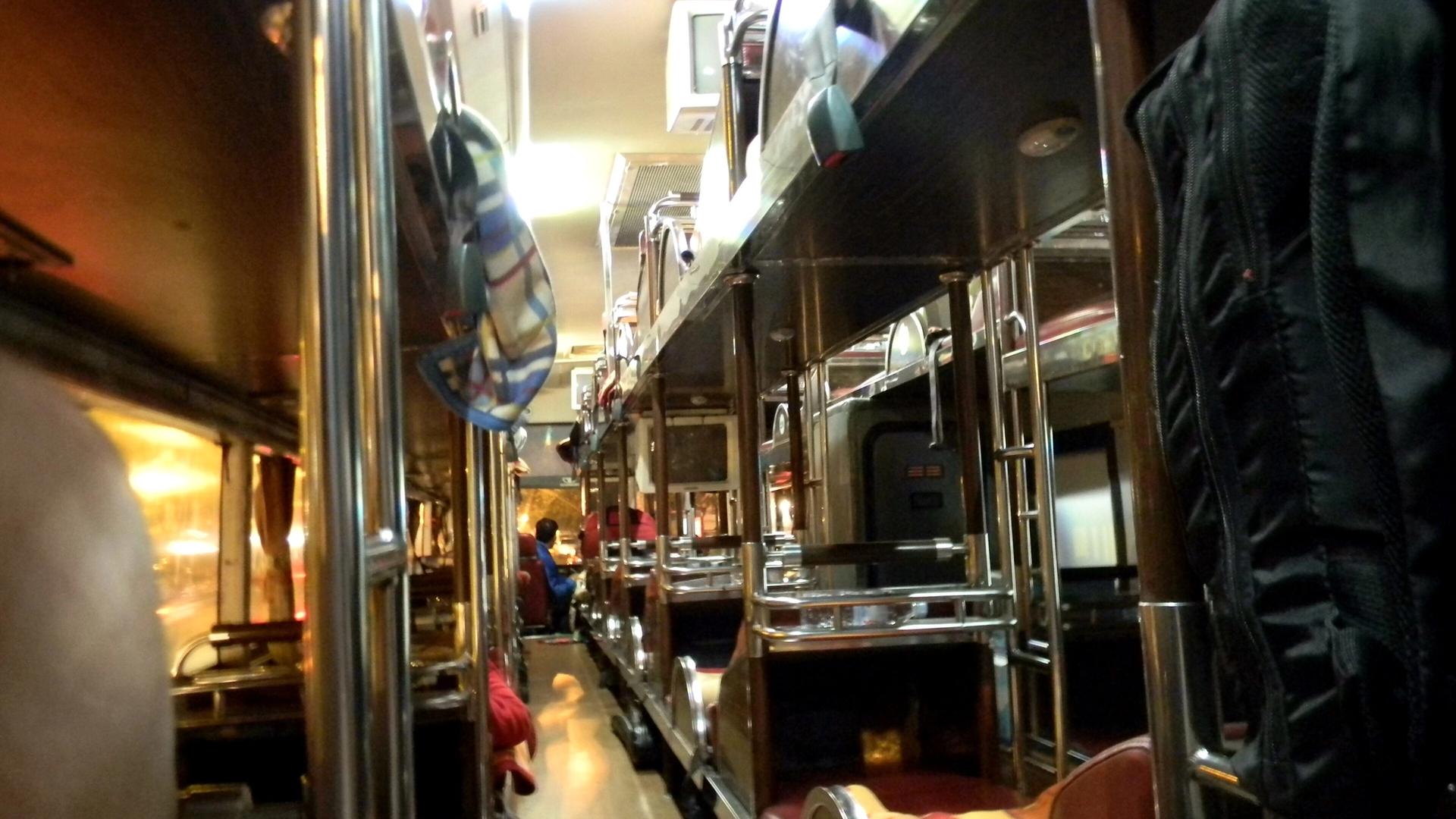
Night roads carry more risk. The UK Foreign Office warns that bus and coach crashes are more likely at night, when tired drivers may keep going. On the longest legs, the night train or a flight avoids a night on the road.
The season matters too. Central Vietnam's rain season runs from October to December, and the UK Foreign Office says flooding there in October and November can disrupt overland travel and block roads. Check weather reports and local road news before a bus or train leg through Hue, Da Nang or Hoi An in those months. Tropical cyclones also reach the eastern coast, normally from May to November, per the same page.
Hoi An has no station of its own. The train stops in Da Nang, about 30 km away by bus or taxi, per seat61. The guide to where to stay in Hoi An covers the ride to each base.
Grab, Taxis and the Metro in the Cities
Inside the big cities, a ride-hailing app removes the haggling. Grab shows a fixed fare in the app before booking, for GrabBike motorbike rides and GrabCar cars alike. GrabCar's displayed fare excludes tolls and surcharges, such as its VND 10,000 charge from 10 pm to 5:59 am. GrabTaxi is different: Grab says its in-app price is only a guide, and the taxi meter sets the fare.
The UK Foreign Office advises official hailing apps such as Grab or XanhSM, which supply licensed cabs. It warns of scammers who claim to be from these firms, so book the whole trip in the app. It also says metered taxis from larger firms are generally reliable, and that a hotel or restaurant can book one.
Grab and the Hanoi Metro QR tickets both live on the phone, so a data plan from the first day keeps them working. One option is an Airalo Vietnam eSIM; the best eSIM for international travel guide weighs it against other providers.
Hanoi's center is changing for motorbike rides. Through December 31, 2026, the low-emission zone's first phase restricts ordinary cars and motorbikes in Area 1 from 7 pm to midnight on Fridays, Saturdays and Sundays, with exceptions for priority vehicles. The same phase already restricts petrol-powered motorbikes working for ride-hailing apps in Areas 1 and 2 of Hoan Kiem ward, according to the Government Portal. From January 1, 2027, the second phase widens the zone to three areas of Hoan Kiem and Cua Nam wards, where those motorbikes may not run and the apps must route them around it. Check the latest city notice before a 2027 trip.
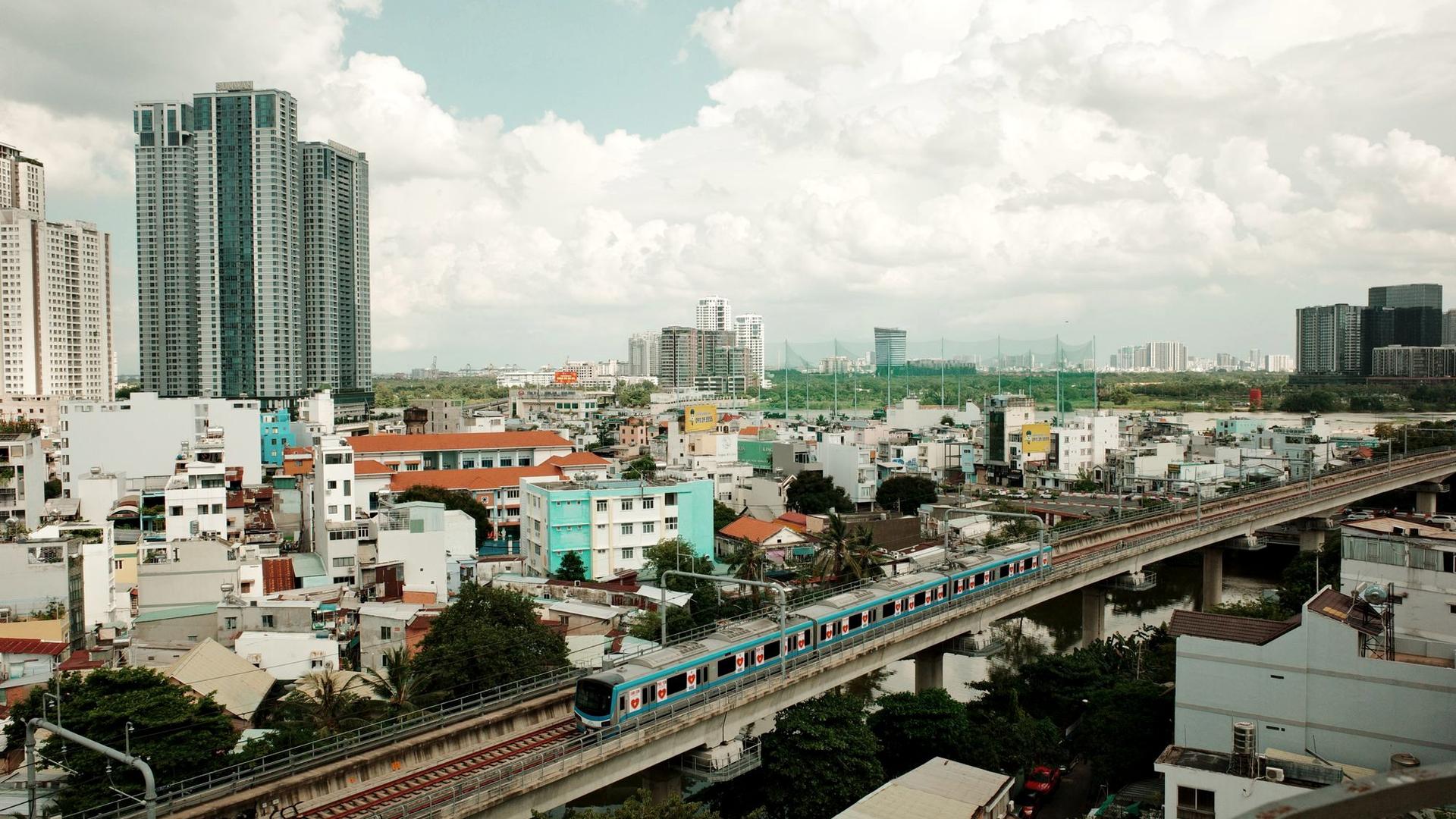
Both big cities now have metro lines, with the same VND 40,000 day ticket (about US$1.56):
- Hanoi Metro: Line 2A from Cat Linh to Yen Nghia, and Line 3 from Nhon, open as far as Cau Giay; single tickets VND 9,000–19,000 by distance; a weekly ticket costs VND 160,000; ticket machines take cash and QR payments
- Ho Chi Minh City Line 1: Ben Thanh to Suoi Tien, 20 km with 14 stations; single tickets VND 7,000–20,000 in cash or VND 6,000–19,000 cashless; a 3-day pass costs VND 90,000
The Ho Chi Minh City fares are the ones the city approved in November 2024, as VietNamNet reported. In October 2026, the line's operator still sold single, one-day and three-day tickets at stations, through the HCMC Metro app and through MoMo and ZaloPay, SGGP reported. Contactless bank cards and phone wallets are accepted too. Fares may have changed since 2024, so check the price on the station machine. Hanoi Metro also runs its own app, with QR tickets for the gates.
The metro covers only part of each city. Hanoi Metro's open stations run from Cat Linh and Cau Giay outward, with none in the Old Quarter, so Grab or a taxi suits most trips around the center.
Motorbikes, Licenses and the Rides to Skip
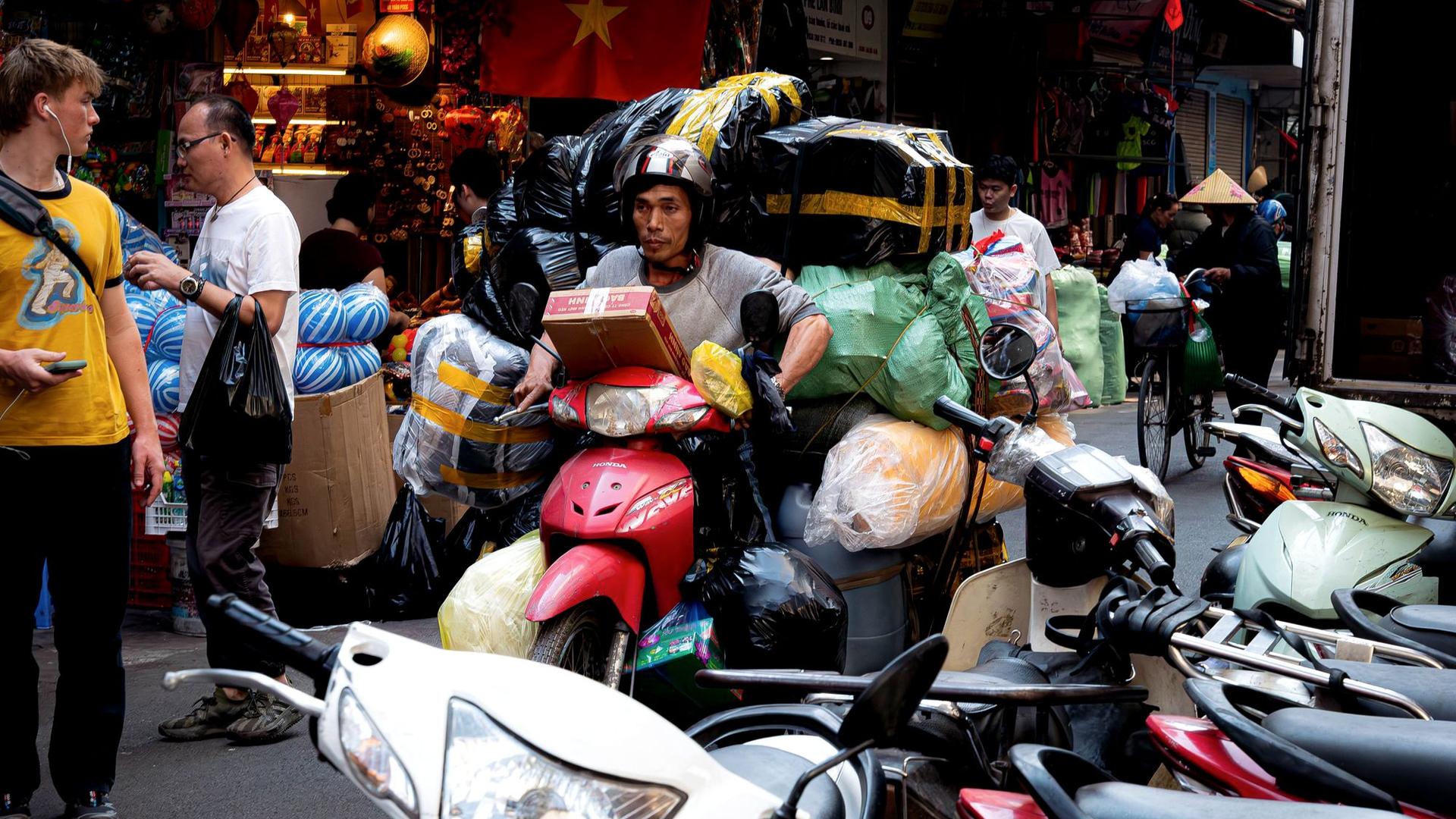
The UK Foreign Office calls motorbike travel in Vietnam much riskier than in the UK. It says accidents are common and advises against hiring a motorbike without riding experience.
The tourism board puts scooter and moped rental at VND 150,000–300,000 a day. It adds that shops may ask for a deposit or a passport on rentals longer than a week. The UK Foreign Office advises the opposite on the passport: don't hand it over as a guarantee, since shops can hold it against claimed damage.
The UK rules for British riders:
- Permit: the 1968 version of the international driving permit plus a UK driving licence, for a car or a motorbike
- Insurance: driving without third-party insurance is illegal
- Helmet: riding without one is illegal, for drivers and passengers
- Alcohol: any alcohol on a test can mean a fine and possible imprisonment
Travelers from other countries should check their own government's advice for Vietnam. Travel insurance should also cover the activity, as the UK page notes. After an accident, even a minor one, a foreign driver can face criminal charges, compensation claims and a travel ban during the investigation, the same page warns.
Rides to skip:
- An unlicensed taxi: the UK Foreign Office links assaults in tourist areas to unlicensed drivers; use an app or a taxi the hotel books
- A ride arranged off the app: someone claiming to be from Grab or XanhSM may be a scammer
- A long night bus when a train fits: night crashes are more likely, per the same advice
Putting the Legs Together
To travel around Vietnam from north to south on these modes, one order runs: arrive in Hanoi, take the SE3 overnight train to Da Nang, a car to Hoi An, then a flight to Ho Chi Minh City. From late December, check whether that last flight lands at Tan Son Nhat or, if it has opened as planned, Long Thanh.
The train is the leg to lock in early. Vexere advises booking 3 to 5 days ahead on weekdays, and as early as possible for weekends, public holidays and Tet, when the peak runs January 23 to February 25, 2027. Klook's Vietnam Railways listing also sells Hanoi–Da Nang tickets.
Sources (18)
- Vietnam National Authority of Tourism — Transport within Vietnam (domestic carriers, flight versus train times, open-tour buses, motorbike rental) · Checked
- VietnamPlus (Vietnam News Agency) — Long Thanh airport set to begin commercial operations on December 24 (October 30, 2026) · Checked
- VietnamPlus (Vietnam News Agency) — Reference exchange rate edges higher (VND 25,652 per US dollar, November 17, 2026) · Checked
- Vexere (authorised agent of Vietnam Railways) — Vietnam train schedule, SE1 to SE10, August 17 to December 30, 2026 · Checked
- Vexere — Hanoi to Da Nang train, live fares for a November 19, 2026 departure · Checked
- The Man in Seat 61 — Train travel in Vietnam (classes, typical fares on SE1–SE4, distances; updated June 10, 2026) · Checked
- Nhan Dan — Railways begin selling 2027 Tet holiday tickets on September 5 (Tet peak dates, official ticket sites) · Checked
- Nhan Dan — Holiday schedules for Vietnamese Culture Day, Lunar New Year, National Day approved (2027 Tet holiday February 4–10) · Checked
- The Sinh Tourist — Open Bus tickets (route, validity, reservations, departure times) · Checked
- Grab Vietnam — GrabBike (fixed fares in the app) · Checked
- Grab Vietnam — GrabCar (fixed fares in the app) · Checked
- Hanoi Metro — lines, ticket prices and how to ride · Checked
- VietNamNet — HCM City launches metro line 1 fares (November 22, 2024) · Checked
- SGGP — Ho Chi Minh City Metro Line 1 to offer ticketing via VNeID (October 2026; ticket types and payment channels) · Checked
- Government Portal (Chinhphu.vn) — Hanoi's low-emission zone inside Ring Road 1, phases and vehicle rules (July 5, 2026) · Checked
- Thang Long, Chinhphu.vn English — Ha Noi to support low-income residents in replacing high-emission motorbikes (July 2026; low-emission zone roadmap, phase 1 and 2 rules, priority vehicles) · Checked
- Thang Long, Chinhphu.vn — Hanoi expands the low-emission zone pilot in Hoan Kiem and Cua Nam from 2027 (November 2026) · Checked
- GOV.UK Foreign travel advice — Vietnam, safety and security (taxis, driving permits, motorbikes, buses) · Checked
Reviewed by an editorFacts checked: How guides are made